One turn, four decisions.
Dice, pawns, money and cards stay on the table. One Event card is turned every round and is the game’s clock.
Roll and move
A double means roll again. A third double means you are stuck in traffic.
Buy or auction
Pay the price on the card, or turn it down and every player bids sealed.
Build and collect rent
Complete a group, build shophouses then towers, and charge whoever stops by.
Events change the board
Floods, closed roads, new air routes, mudik, the capital moving.
The game never endsThe Event deck is the clock: 10–12 rounds.Go bankrupt, then just watchRunning short becomes debt; everyone plays to the end.The leader runs away with itA wealth tax, Asset Auctions and a subsidy for the poorest.The first seat always has the edgeThe round opener rotates, and starting cash is set per seat.
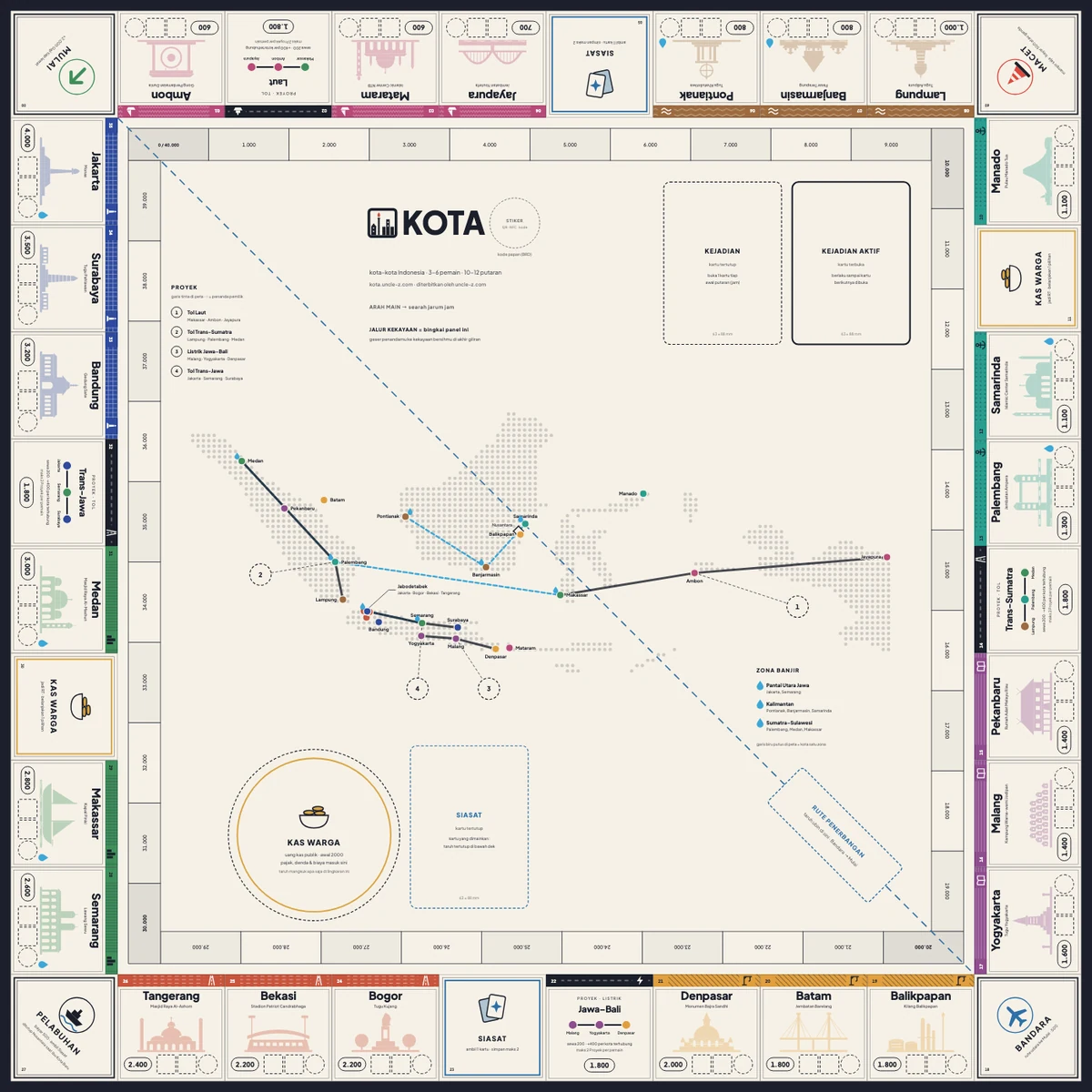
24 cities, 24 landmarks.
Eight groups from cheapest to most expensive. Tap a city to see its card.
- Tol LautMakassar, Ambon, Jayapura
- Tol Trans-SumatraLampung, Palembang, Medan
- Listrik Jawa–BaliMalang, Yogyakarta, Denpasar
- Tol Trans-JawaJakarta, Semarang, Surabaya
Every number is on the card.
Price, rent, shophouse cost, mortgage, redemption and the auction value of every bid card are printed on the city card. The rulebook needs no tables.
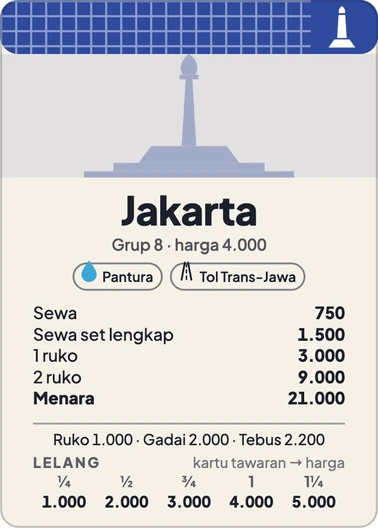
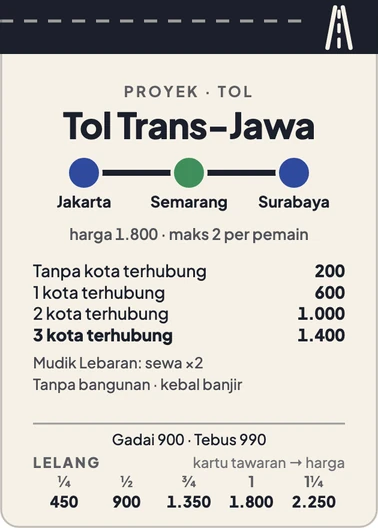
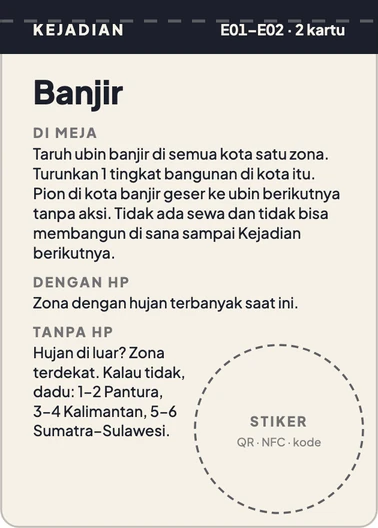
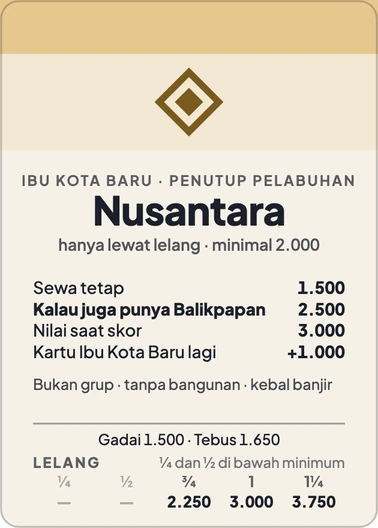
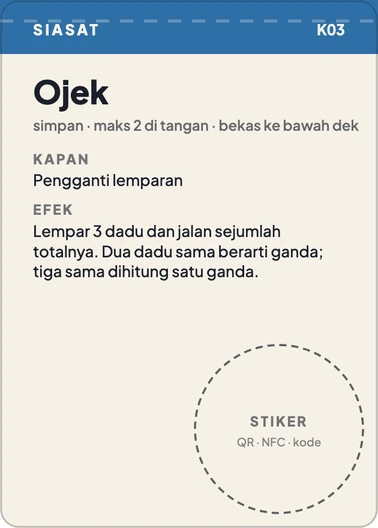
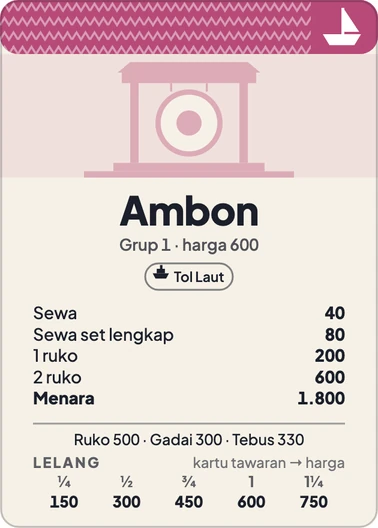
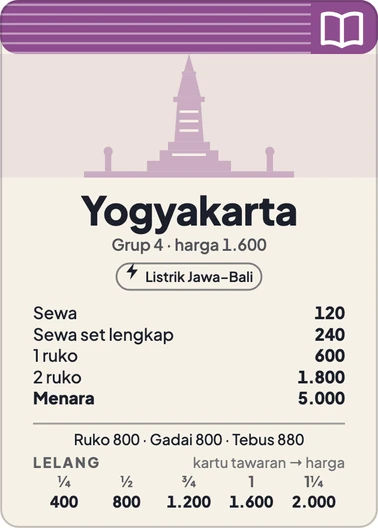
Tap to fan out the cards.
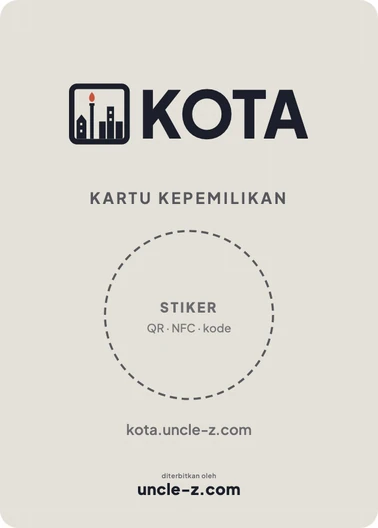
Tap the card, the phone does the maths.
Every card has one round 27 mm sticker: a QR code for any phone camera, and in the Konek edition an NFC tag as well. The codes are signed, so cards from another box or fake codes are rejected.
The phone never tells players what to do. The rules are exactly the same with or without it; the phone only counts money, keeps sealed bids and picks Event targets.
Frequently asked questions
How many people can play Kota?
Three to six players, best with four or five. Each seat starts with slightly different cash so that every seat has the same chance to win.
How long does a game take?
About 50–70 minutes. The Event deck is the clock: one card is turned each round, 12 rounds for 4 players, 11 for 3 and 10 for 5–6. When the Final Round card is turned, the game ends that round.
How do you win?
The player with the highest net worth after the Final Round wins: cash, cities and Projects, shophouses and towers, minus debt.
Does anyone go bankrupt and drop out?
No. If you cannot pay, the shortfall becomes debt. Everyone keeps playing to the end.
Do you need a phone?
No. The Paper Edition is played entirely at the table with money chips. The phone is an extra: it counts money, takes sealed auction bids and picks Event targets from real data.
What are the QR and NFC stickers on the cards for?
Every city card, Event card, Tactic card, player card and the board has a round 27 mm sticker with a unique signed code. Scanning it opens that card’s page on kota.uncle-z.com. In the Konek edition the same sticker is also an NFC tag, so you just tap it to your phone.
Which cities are on the board?
24 cities from Sumatra to Papua, from Ambon to Jakarta, plus 4 infrastructure Projects: Tol Laut, Tol Trans-Sumatra, Listrik Jawa–Bali, Tol Trans-Jawa.
Where can I buy Kota?
Kota is still a prototype and not for sale yet. The full rulebook (in Indonesian) can already be downloaded from this site.
Is the game in English?
The board, cards and rulebook are in Indonesian. City names and landmarks are the same in any language.
Download the rulebook (Indonesian)All edge cases (Indonesian)